AikiAitken

Miyamoto Musashi


The Book of Five Rings

🗡️ Legendary Japanese Swordsman

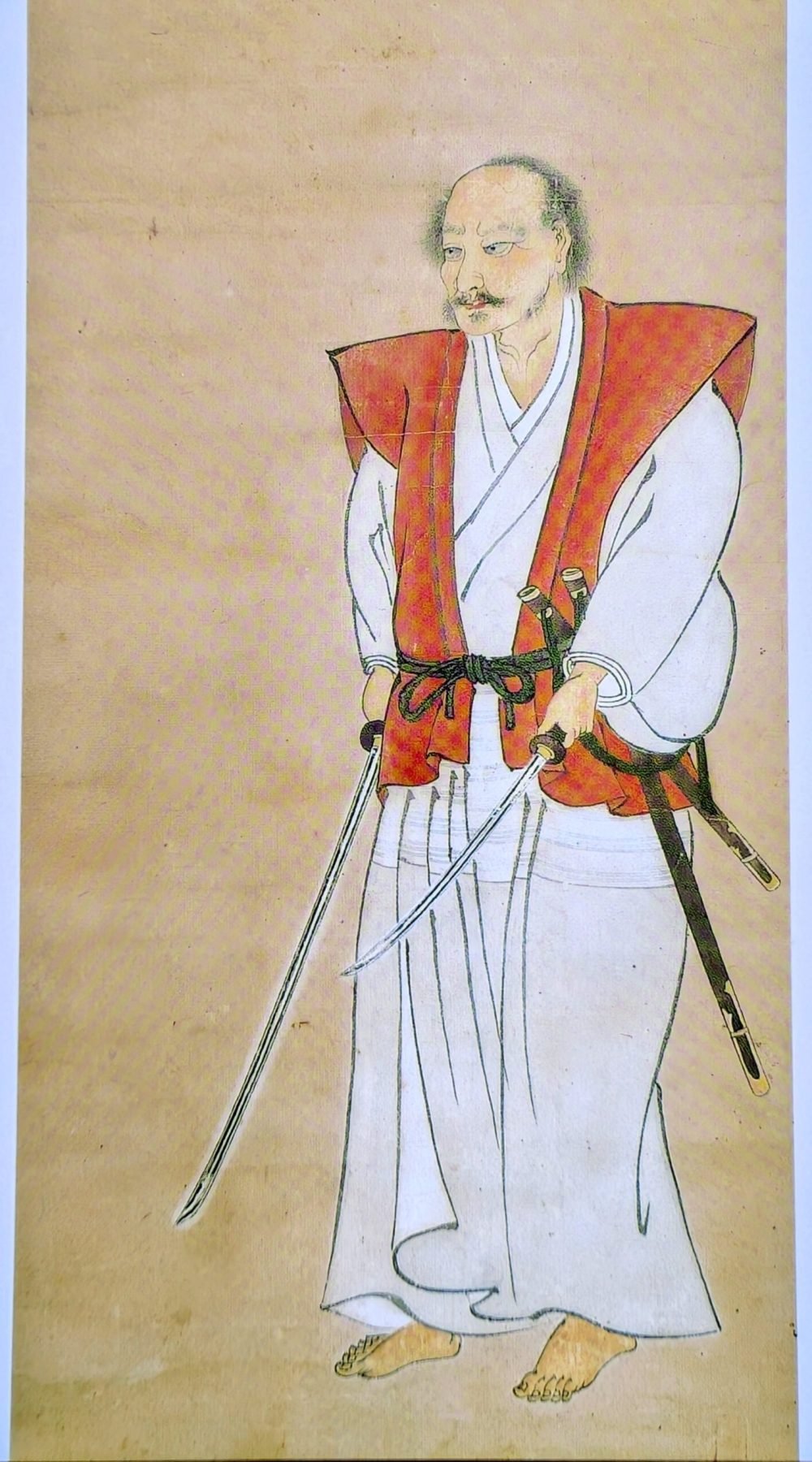
On the Musashi trail in Southern Japan, I had the amazing pilgrimage opportunity of visiting some of the key historic sites of the legendary Japanese swordsman – Miyamoto Musashi 宮本 武蔵 (1584–1645).

Below is a summary of Musashi’s life, philosophy and strategies, including an introduction to his classic manual, The Book of Five Rings. It is accompanied by location images from key sites, manuscripts and personal historical artifacts — offered as a starting point for study, reflection and strategic insight. Enjoy!

2
1
120

THE BOOK OF FIVE RINGS 五輪書 (Go Rin no Sho) - is divided into five (5) chapters: 

🌍 The Book of Earth (地の巻)

Focus: foundation, mindset, discipline, mastering fundamentals and the path of the warrior.

  • “You must understand that there is more than one path to the top of the mountain”
  • “In strategy it is important to see distant things as if they were close and to take a distanced view of close things”
  • “The ultimate aim of martial arts is not having to use them”
  • “Fixation is the way to death; fluidity is the way to life”
  • “From one thing, know ten thousand things”


💧 The Book of Water (水の巻)

Focus: flexibility, clarity, adaptability like water, responding to conditions and mastering technique through flow.

  • “You should not have a favourite weapon”
  • “Perceive that which cannot be seen with the eye”
  • “In strategy, you must know the ways of other schools, so that you may understand your own”
  • “You must remain calm at all times — even in the face of danger”
  • “If you know the way broadly, you will see it in all things”


🔥 The Book of Fire (火の巻)

Focus: combat strategy and intensity, action, timing, seizing initiative and the rhythm in battle.

  • “Do nothing that is of no use”
  • “The primary thing when you take a sword in your hands is your intention to cut the enemy, whatever the means”
  • “The important thing in strategy is to suppress the enemy’s useful actions but allow his useless actions”
  • “In battle, if you make your opponent flinch, you have already won”
  • “Timing is important in dancing, in archery, and in strategy — in all things”


🌬 The Book of Wind (風の巻)

Focus: understanding and awareness, avoid rigid traditions. Critique other martial systems and clarity of one’s own way. Self-reliance.

  • “You must not sleep under the illusion that you are finished”
  • “Do not let the mind be clouded with the things outside of you”
  • “The true way of strategy is the craft of defeating the enemy in any situation”
  • “Do not copy others blindly — to imitate is to loose the way”
  • “Do not think dishonestly”


🌌 The Book of Void (空の巻 — The Book of Emptiness)

Focus: Enlightenment, insight – the concept of “Nothingness” and transcending with intuition beyond technique. Spirituality.

  • “The void is that which has no beginning and no end”
  • “By knowing things that exist, you can know that which does not exist”
  • “To attain the way of strategy is to reach a state of ‘no-mind’”
  • “In the void is virtue, and no evil. Wisdom exists, principle exists, the way exists”
  • “All things exist for those who know the void”

⚔️MUSASHI SWORD STYLE:

Famous for his unique two-sword wielding style – Niten Ichi-ryū (“Two Heavens as One”), using a long sword and short sword, Musashi was generally unorthodox in his approach, deliberately questioning the conventions and traditions of swordsmanship of his time.

Technically, Niten Ichi-ryū was far more than simply wielding two swords simultaneously. Musashi developed the ability to use the long sword with one hand, while employing the shorter sword independently in the other, allowing either weapon to be used for striking, deflecting or controlling according to the circumstances. His method was not based on a rigid division between attack and defence, but on the coordinated use of both weapons, body movement and footwork to maintain freedom of action and adapt to an opponent.

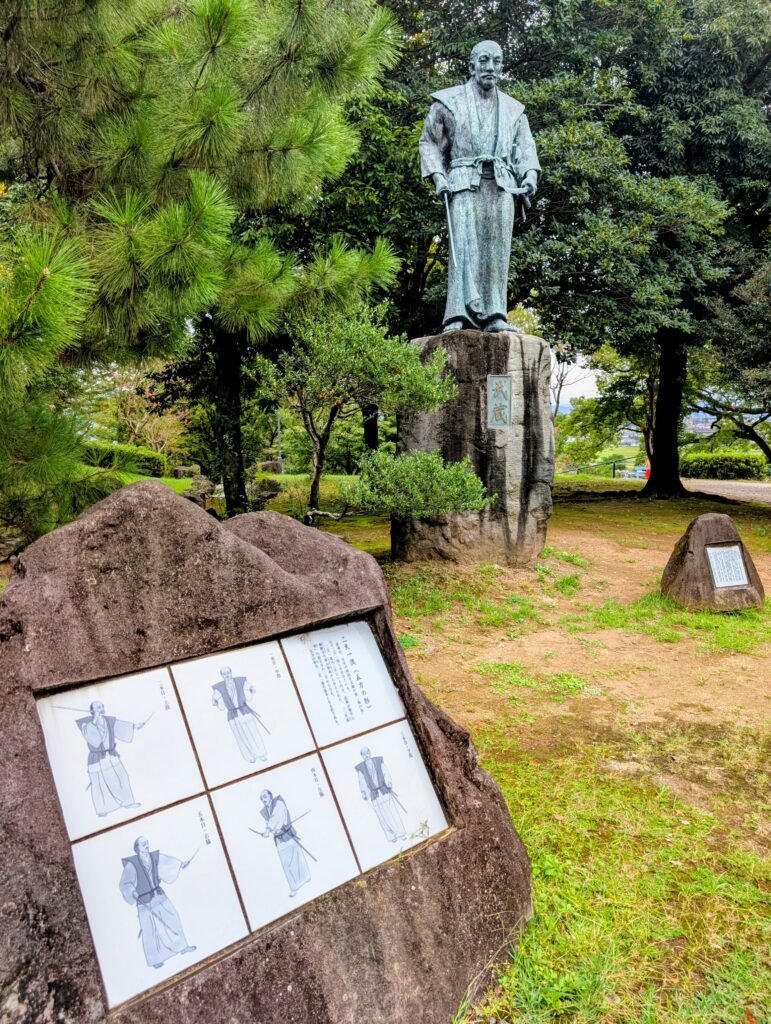
Musashi described five fundamental sword positions, or kamae: Middle, with the sword held centrally and the point directed towards the opponent; Upper, with the sword raised above the head; Lower, with the sword held downwards; Right Side, with the sword positioned to the right; and Left Side, with the sword positioned to the left. These were not intended as rigid poses, but as practical positions from which the sword could be used according to the circumstances. Musashi regarded the Middle position as the most fundamental, while stressing that the swordsman should be able to move freely between positions rather than become fixed to one.

Central to his approach were distance, timing and rhythm, together with natural posture and decisive, efficient movement. The two swords were ultimately a means of developing adaptability – responding to an opponent, changing rhythm and exploiting opportunity without becoming constrained by a predetermined technique. In this respect, Musashi’s swordsmanship was not simply a distinctive way of holding two weapons, but a practical study of movement, timing, distance and the ability to act decisively under pressure.


⚔️ 

Musashi reminds us: mastery is not just about defeating an opponent, but about continuous self-discipline, self-improvement and seeing the world without illusion. Musashi is remembered as Japan’s most legendary swordsman, strategist, and philosopher. Famous for fighting—and winning—over 60 duels, his life embodied discipline, adaptability and mastery.

In 1645, toward the end of his life, Musashi wrote The Book of Five Rings (Go Rin no Sho), a timeless manual on martial arts and military strategy. While written as a guide to swordsmanship, Musashi’s insights extend far beyond the battlefield and are often used in the modern boardroom.


🎨 

Musashi Beyond The Sword: 
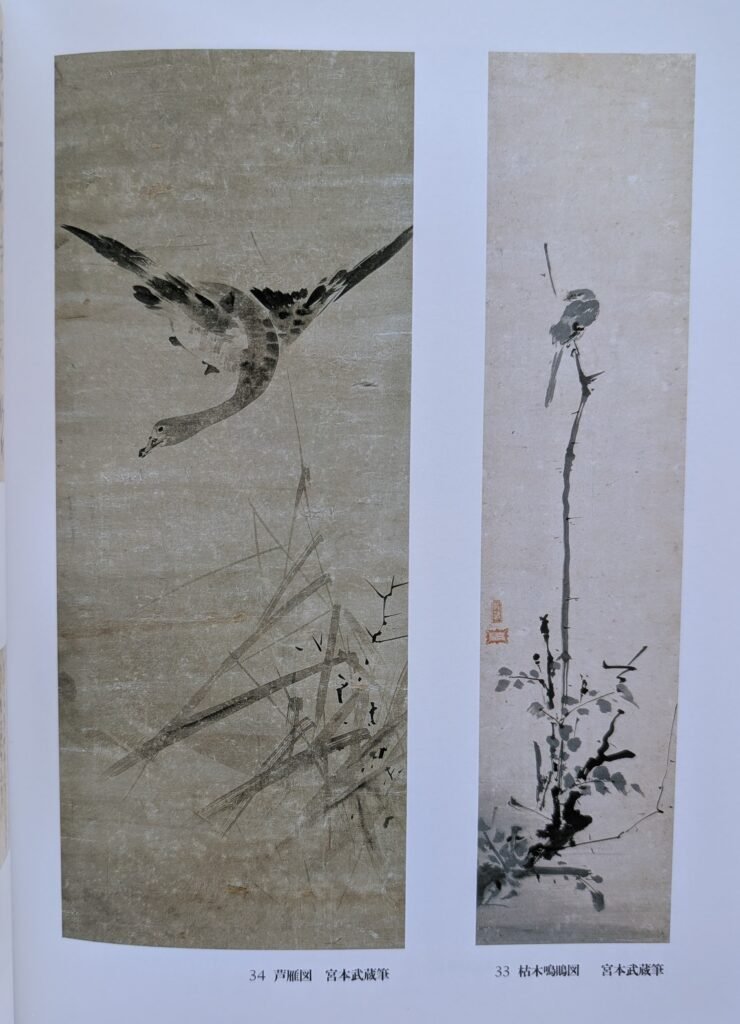
Artist & Calligrapher: Created bold ink paintings (Wild Geese Among Reeds, Shrike on a Dead Tree) and Zen calligraphy, reflecting his disciplined spirit.
Philosopher: Taught that mastery of the sword was part of mastering life itself.
Legacy: His philosophy continues to inspire martial artists, military strategists and business leaders worldwide.
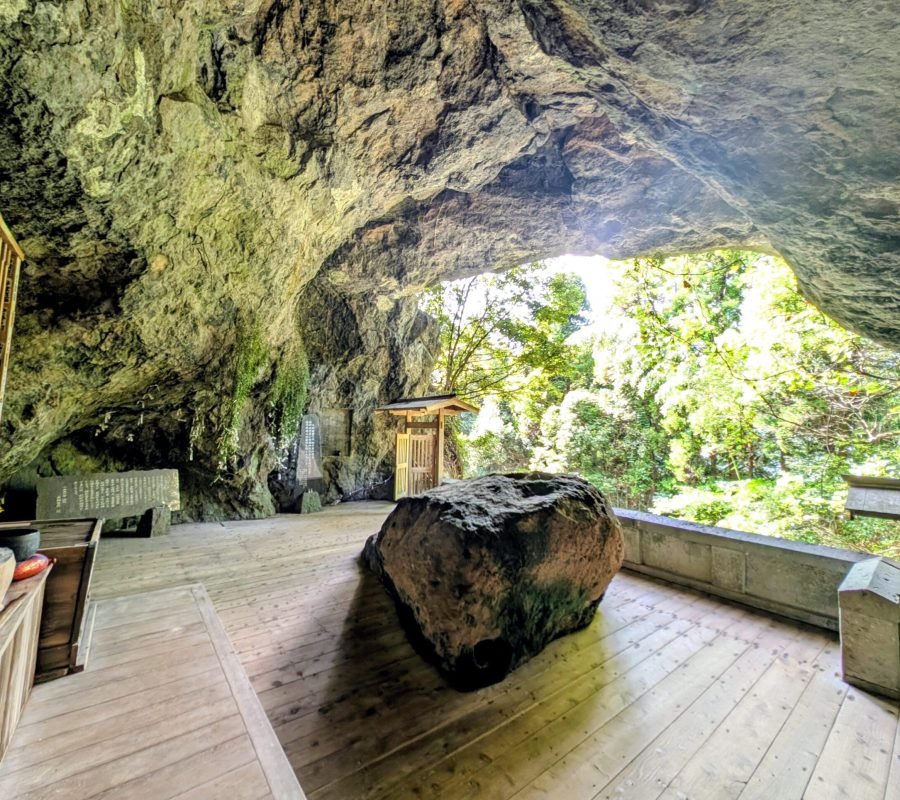
🪨⚔️REIGANDO CAVE

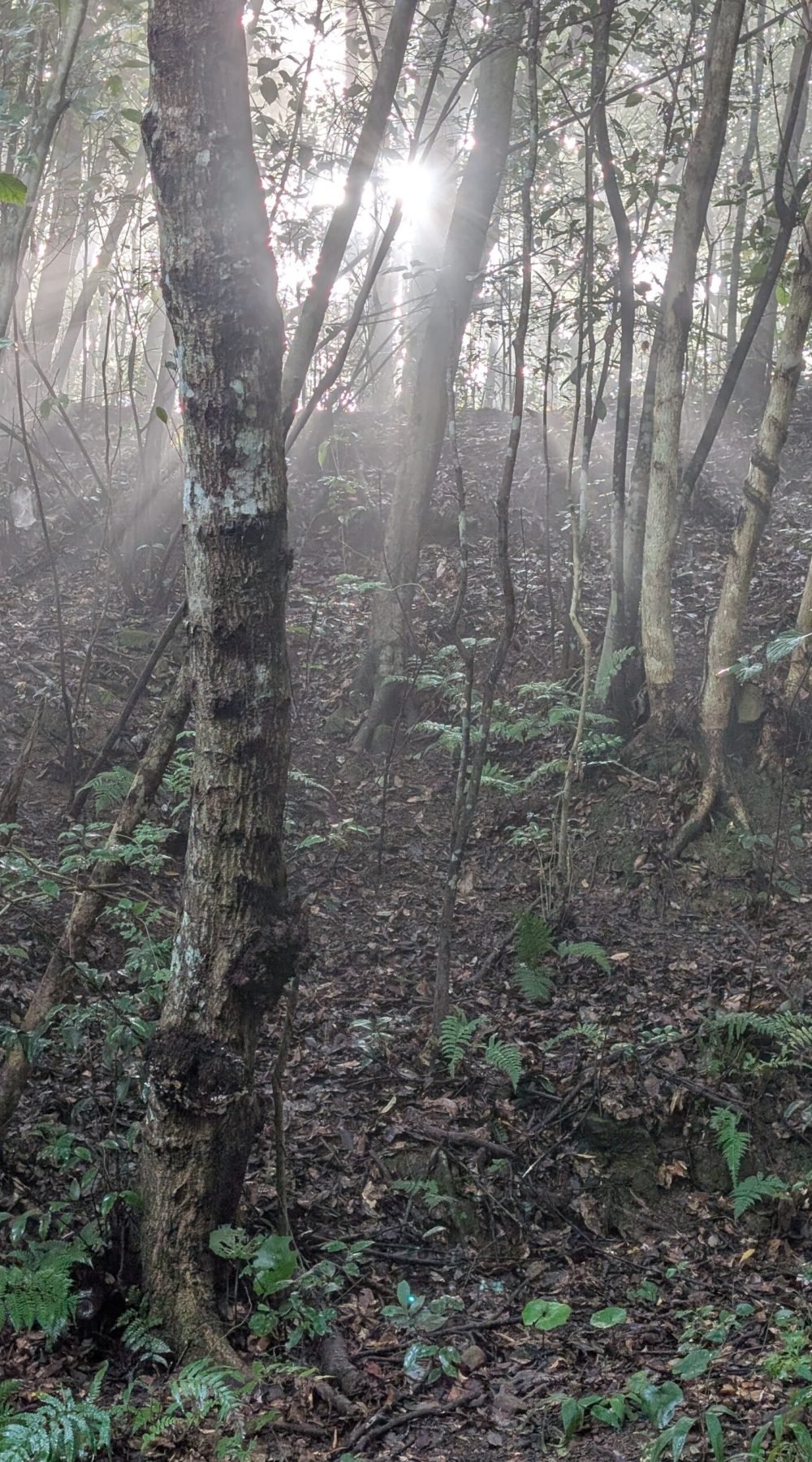
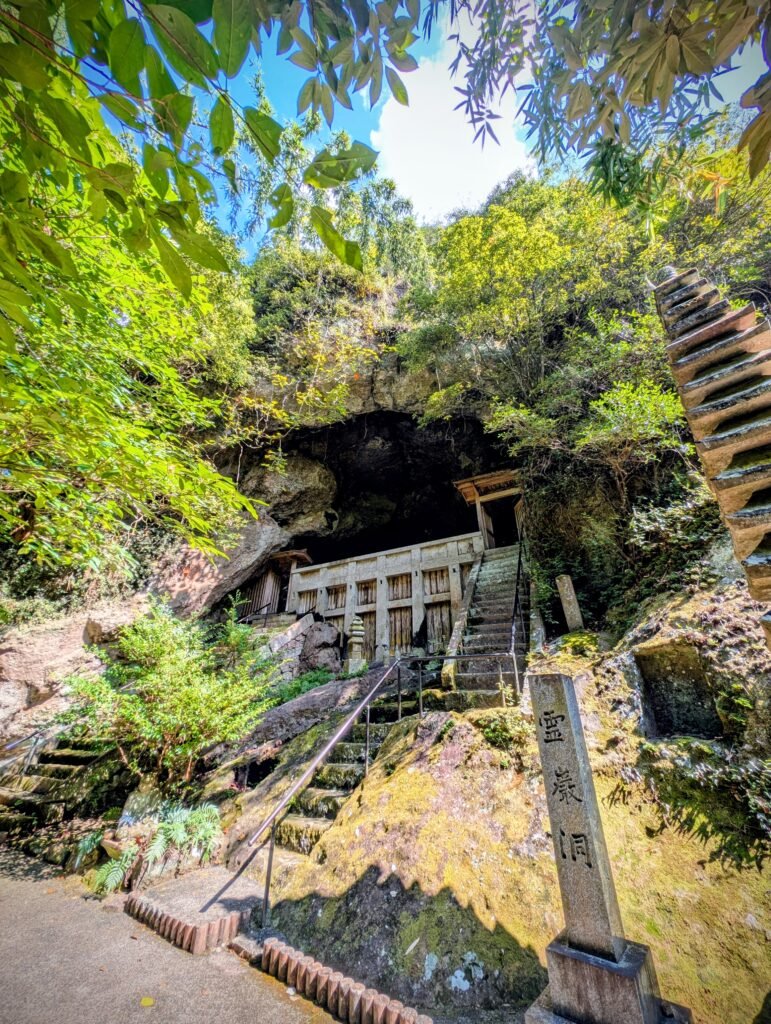
 Travelling west of Kumamoto city and into the mountains, a visit to Reigandō (霊巌洞, meaning “Spirit Rock Cave”) retreat is another fascinating must do on the Musashi trail. A place of stillness, a sanctuary.

The Cave is famous as the place where Musashi spent the last few years of his life and is located within Unganzenji Temple, a Zen temple founded in the Nanbokucho period (1336–1392) by Toryo Eiyo, the Chinese priest who first brought Zen to Japan.

In 1643, weakened by illness or injury, Musashi withdrew to Reigandō.
Here he meditated, painted, and reflected on decades of battle: more than 60 undefeated duels, campaigns at Sekigahara, Osaka, and Shimabara, and his travels forging his unique two-sword style.
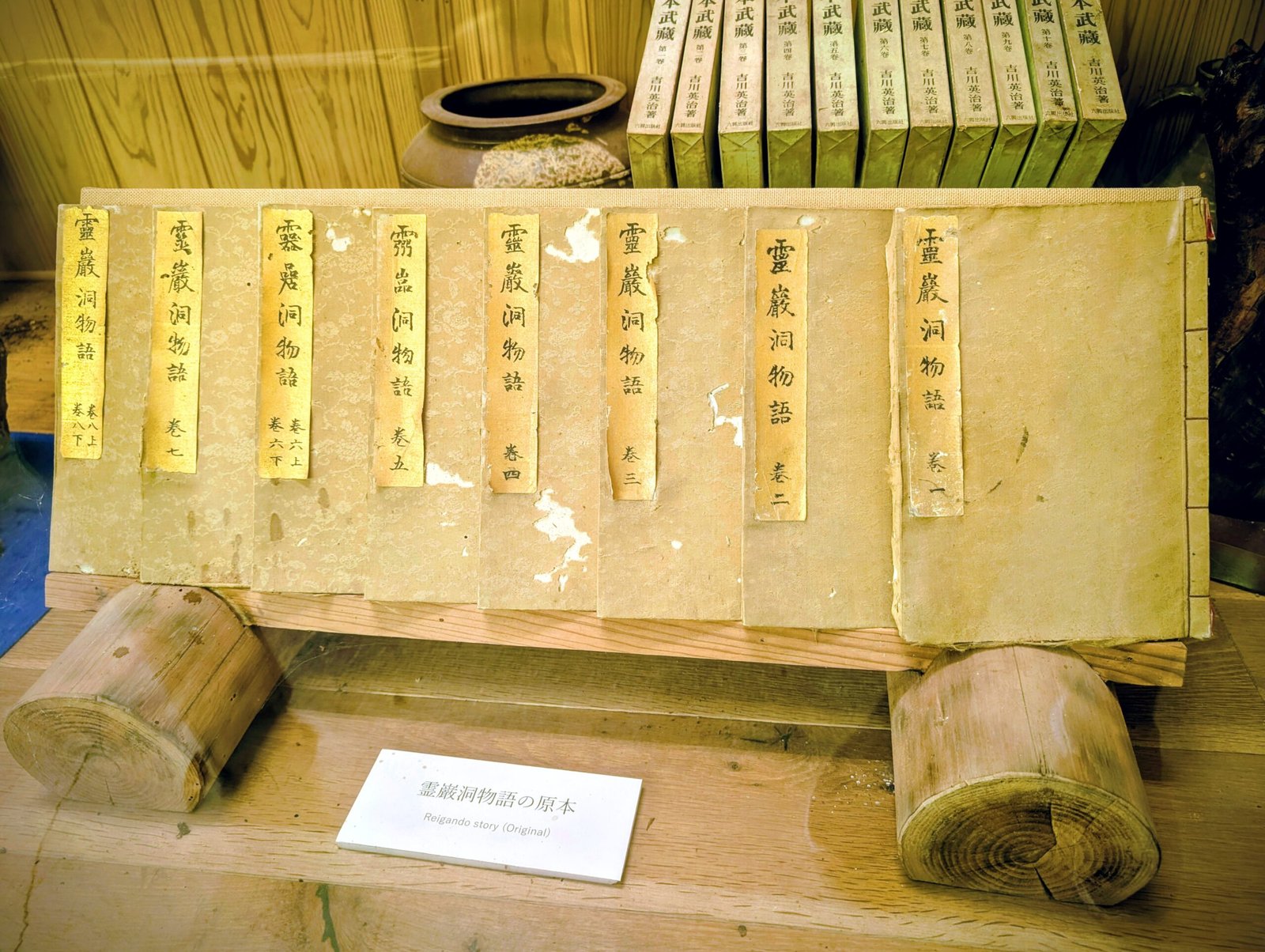
It was in this cave he wrote his masterwork Go Rin no Sho (The Book of Five Rings), completed shortly before his death in 1645.

⚔️⚔️⚔️⚔️⚔️⚔️⚔️⚔️⚔️⚔️

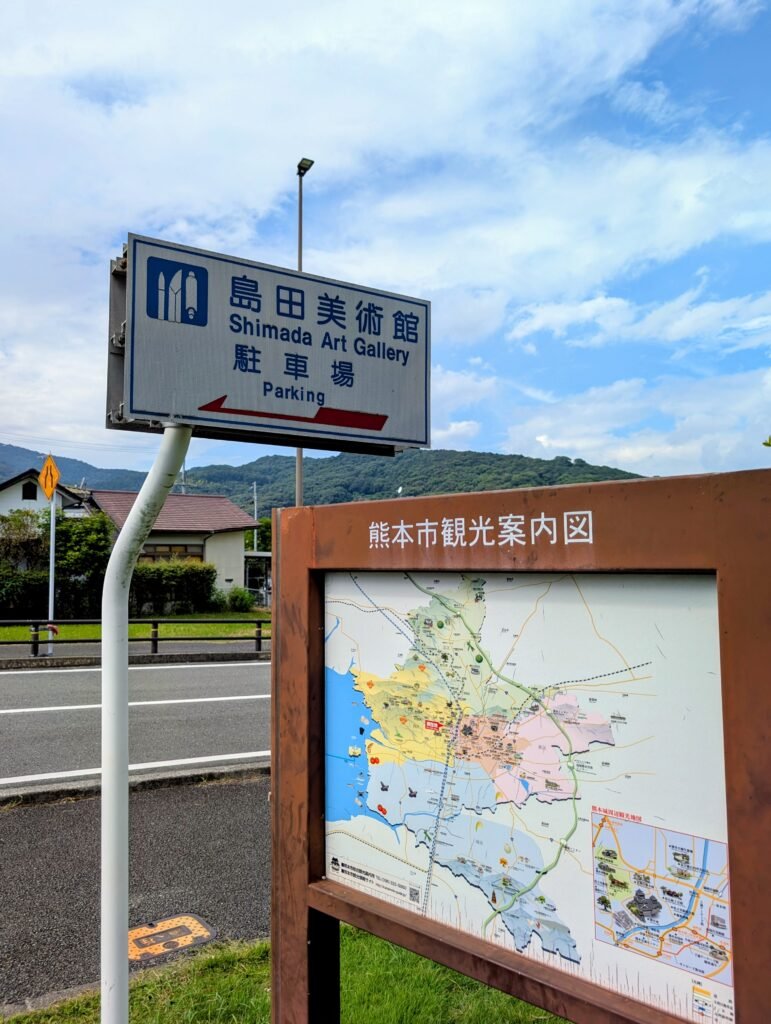
🏯⚔️SHIMADA ART GALLERY

This private museum holds an amazing collection and is well worth the visit, when on the Musashi trail!✨✨

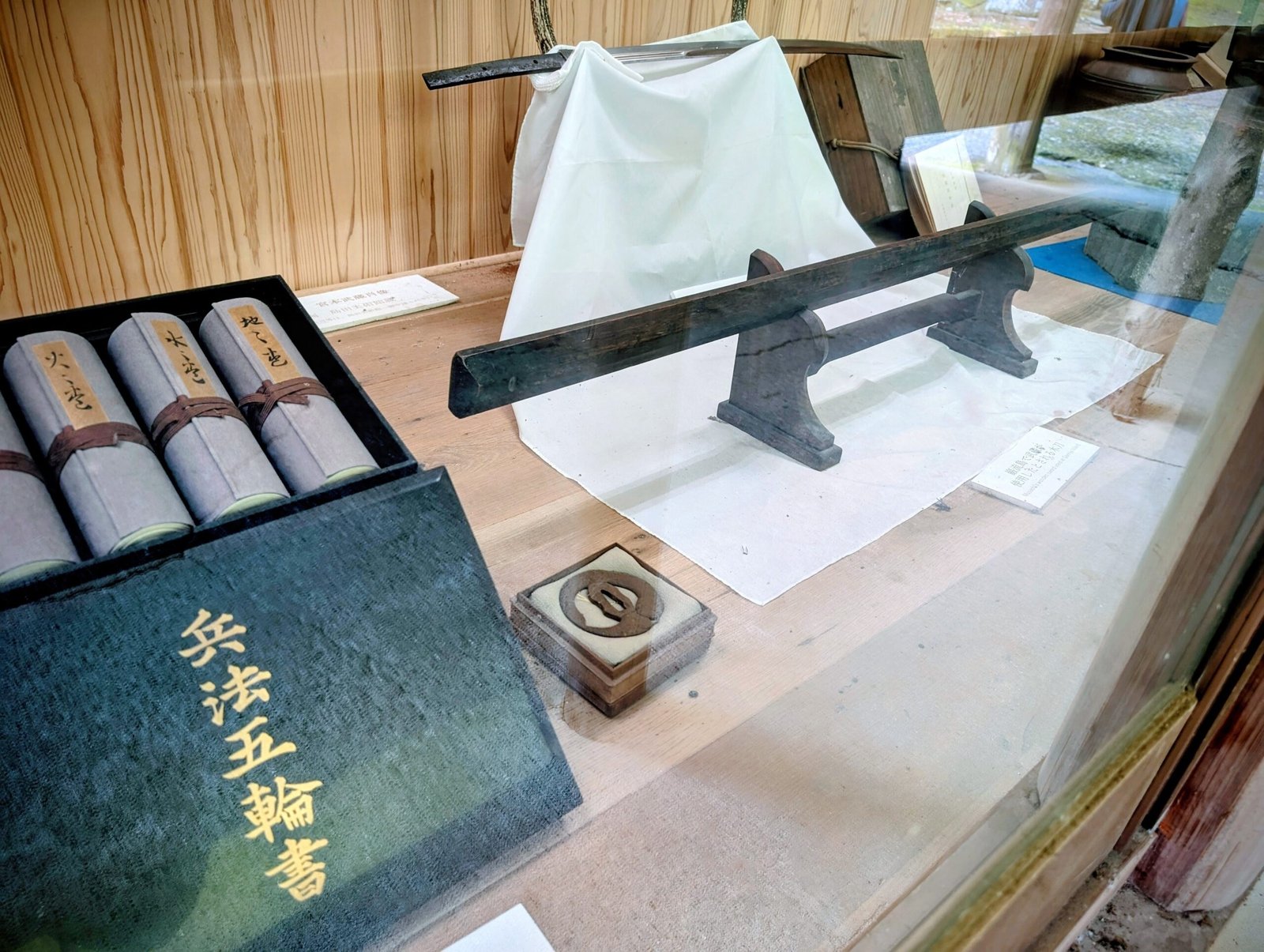
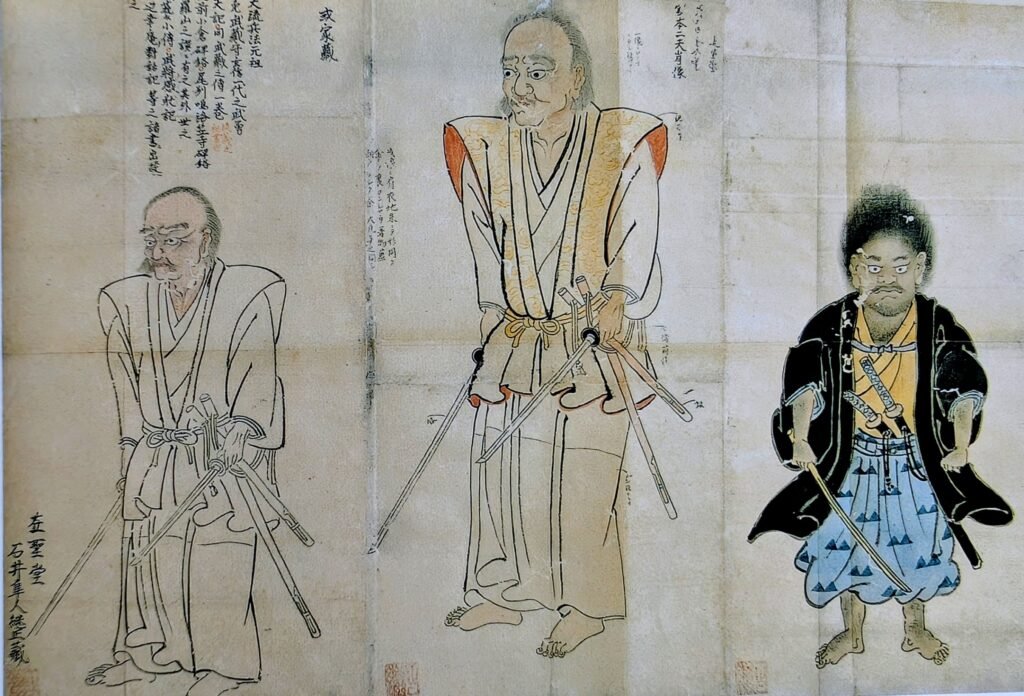
The late founder and antique collector Mr Matomi Shimada established the museum in 1977 to preserve and display his life’s collections, which include a number of Musashi’s personal artifacts, artworks and posthumous portraits. A visit steps you back into the ancient world of feudal Japan and sword culture.
It Includes:

  • 🖼️Portraits: From a posthumous painting showing Musashi’s left side (a sign of passing) to a striking portrait of him at age 13 during his first duel.
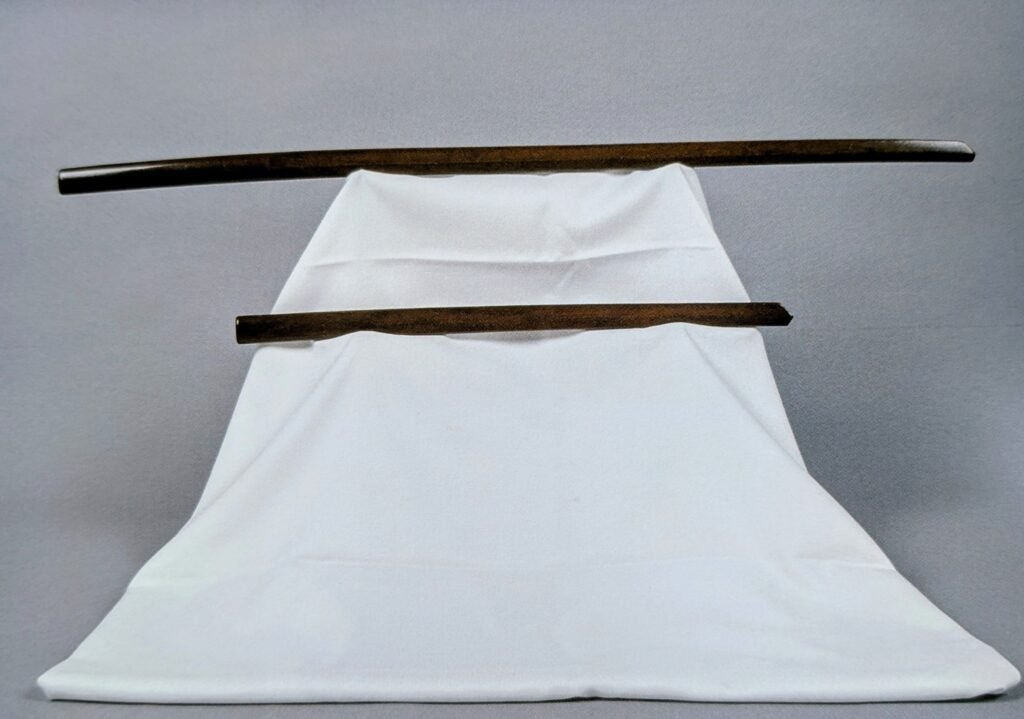
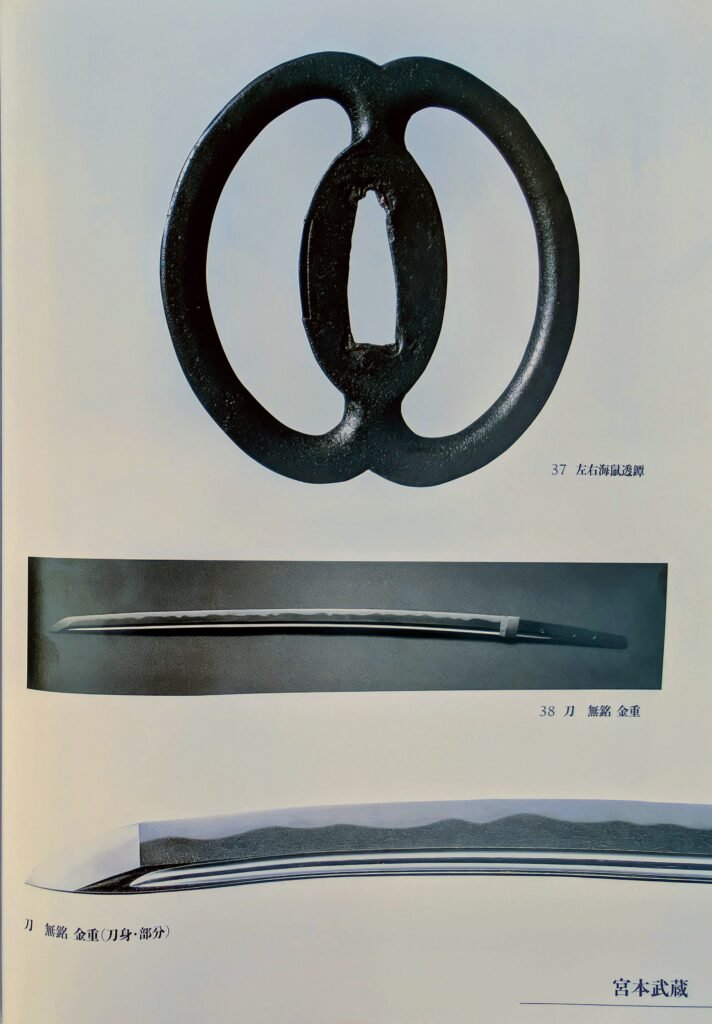
  • ⚔️Swords: Including a Mino Kinjū blade evidently used in his duel with the Yoshioka school, shortened for superior manoeuvrability.
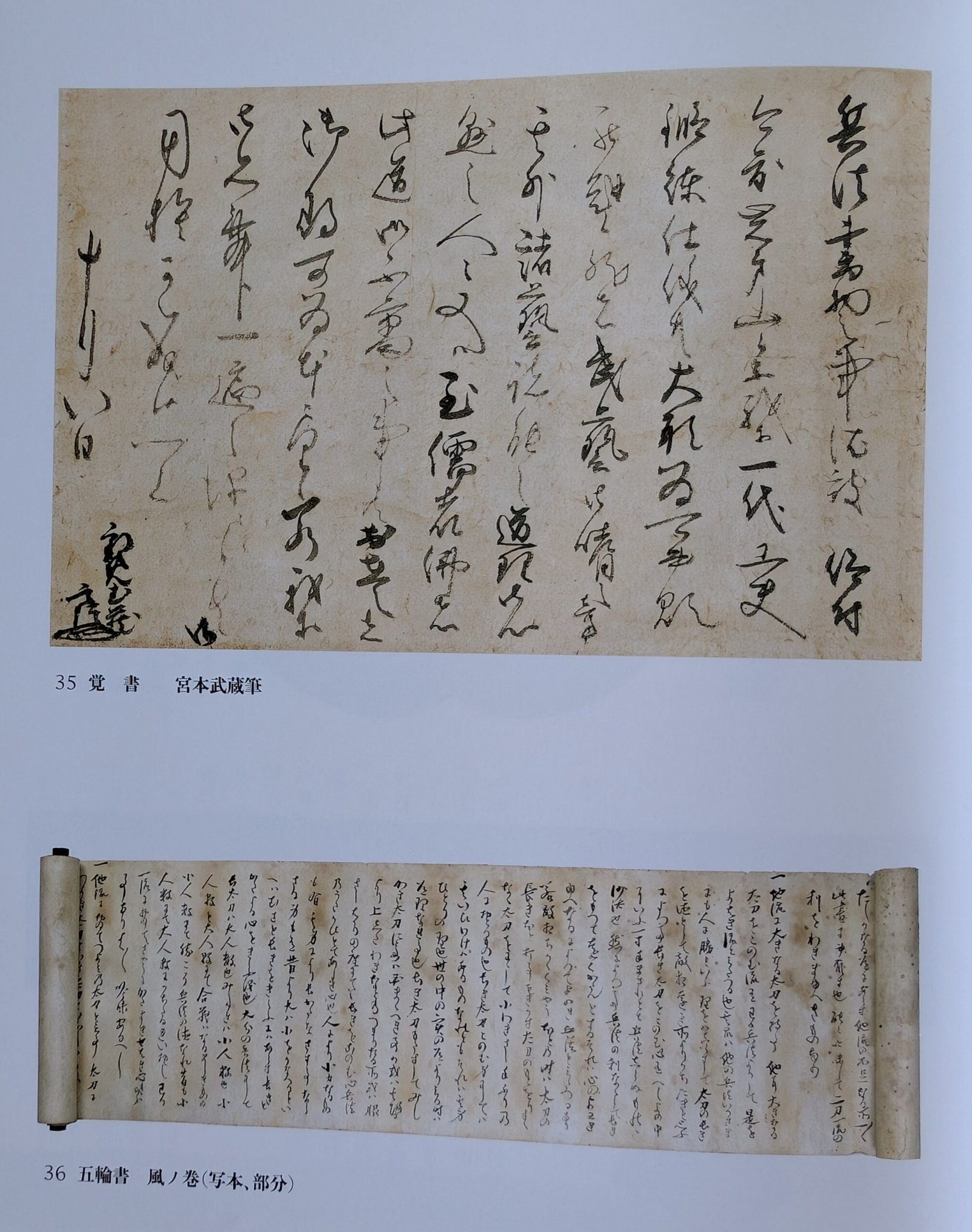
  • 🖌️Artworks: Ink paintings by Musashi himself, revealing his artistic side. Wild Geese Among Reeds, Shrike on a Dead Tree.
  • 📜Calligraphy & Writings: A 1651 copy of the “Wind” chapter from The Book of Five Rings, transcribed by his disciple Terao Magonojo. Along with Musashi’s personal notes.

⚔️⚔️⚔️⚔️⚔️⚔️⚔️⚔️⚔️⚔️

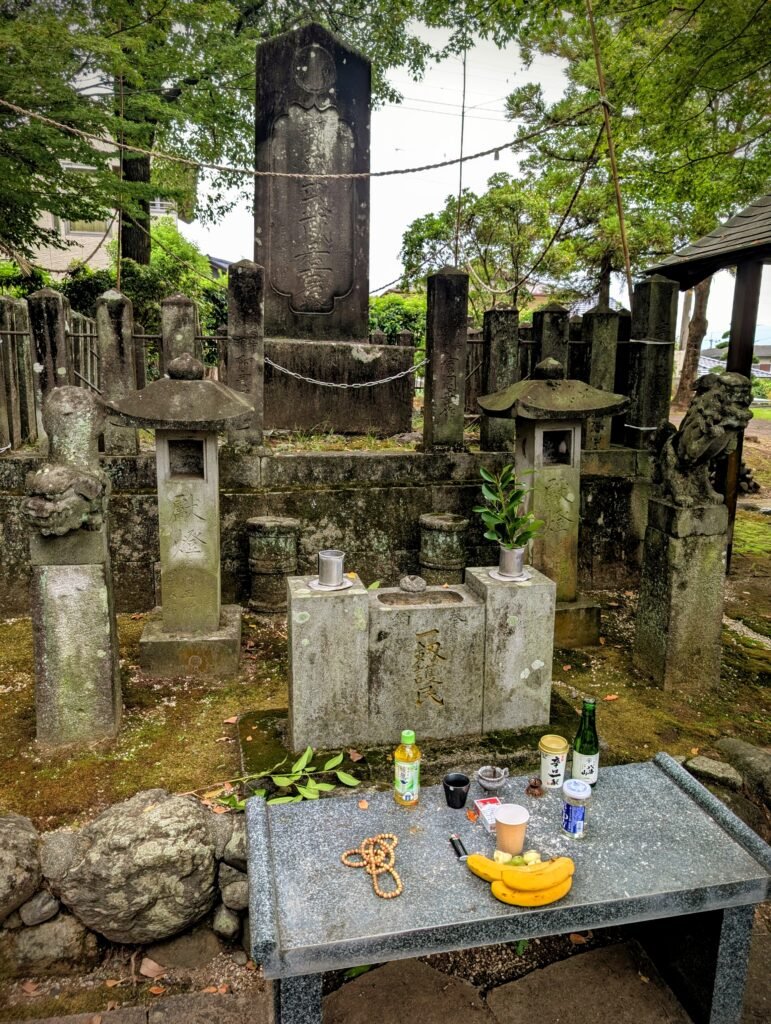
🪦⚔️ MUSASHIZUKA PARK宮本武蔵の墓 (Burial Grave Site)

On 19th May, 1645, Musashi died at age 61 (62 by Japanese count).
He passed at Reigandō Cave and was then laid to rest in Musashizuka Park. Legend says that Musashi was buried with his armour and requested this location to oversee the regular Diamyo military parades on Otsu Road, Kumamoto. The park forms the final part of the Musashi trail and legacy.

⚔️⚔️⚔️⚔️⚔️⚔️⚔️⚔️⚔️⚔️

BREIF LIFE HISTORY: Musashi – (1584–1645)

Miyamoto Musashi 宮本 武蔵 (1584–1645)

Laid to rest in Kumamoto.

💡 : “Do not fear death; rather, fear the unfulfilled life”

1584 – Birth
Born in Harima Province (birth name: Shinmen Bennosuke).
Son of Shinmen Munisai, a renowned swordsman.

1596 – First Duel (Age 12–13)
Defeats Arima Kihei of the Shintō-ryū in his first recorded duel.

1600 – Battle of Sekigahara (Age 16)
Joins the Toyotomi (Western) side in Japan’s decisive civil war.
Survives the defeat of his faction.

1604–1605 – Yoshioka Clan Duels (Kyoto)
Defeats Yoshioka Seijūrō and Yoshioka Denshichirō in single combat.
Ambushed by dozens of Yoshioka retainers but cuts down Yoshioka Matashichirō, ending the clan’s martial dominance.

1600s (Early–Mid)
Wanders Japan, refining his art.
Engages in over 60 duels throughout his life — undefeated.
Develops his unique style: Niten Ichi-ryū (“Two Heavens as One”), wielding long and short swords simultaneously.

1612 – Duel with Sasaki Kojirō (Ganryūjima Island)
Famed duel with Kojirō, master of the nodachi (long sword)
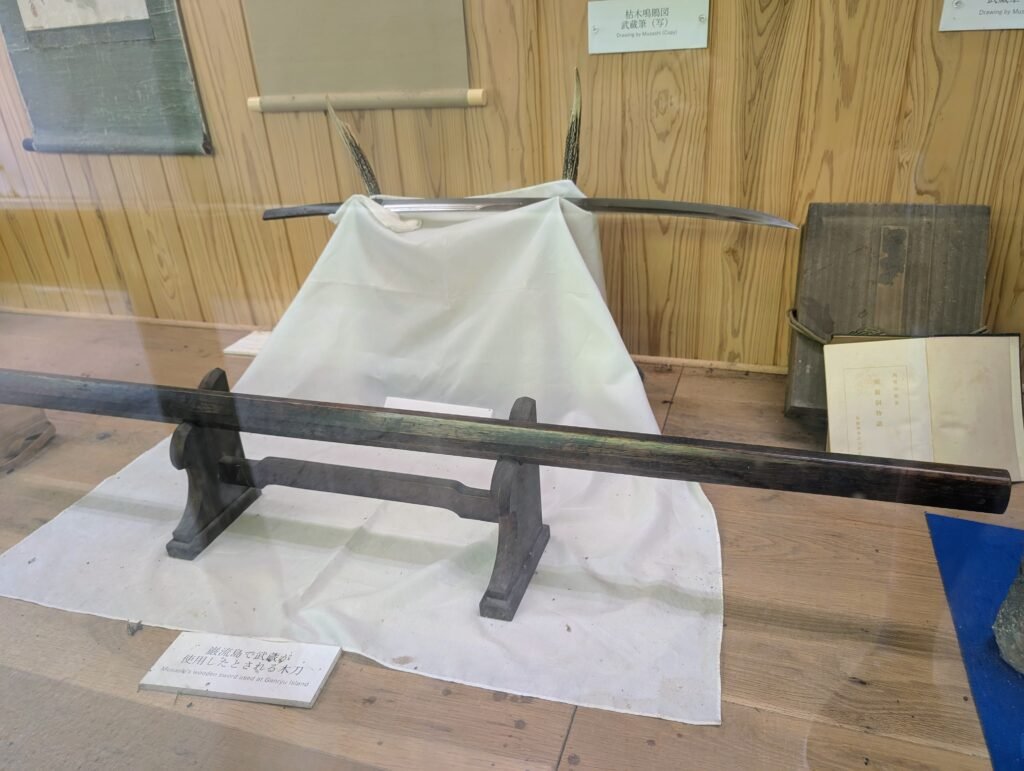
Musashi arrives late, armed with a bokken carved from a boat oar.
Strikes Kojirō down with a single decisive blow.

1614–1615 – Siege of Osaka
Fights during Tokugawa’s campaign against Toyotomi Hideyori.
Experiences large-scale battlefield combat in addition to personal duels.

1632 – Service to the Hosokawa Clan (Kumamoto)
Enters Hosokawa service as retainer and martial instructor.
Settles in Kumamoto, training samurai and writing on military science.

1637–1638 – Shimabara Rebellion
Present during the suppression of the uprising in Kyushu, which was led by Amakusa Shiro, a young Christian samurai.
His exact battlefield role is unclear, but records confirm his involvement.

1640 – Declining Health
Suffers serious illness or injury; becomes less active in combat.

1643 – Reigandō Cave Retreat
Withdraws to a mountainside cave near Kumamoto.
Lives in seclusion, meditating and distilling his life’s philosophy.
Composes Go Rin no Sho (The Book of Five Rings), completed just before his death.

1645 – Death (19th May)
Passes away in Reigandō cave at age 61 (62 by Japanese count).